“SNP Politics in My Life” by former MSP Bill Walker
Former SNP MSP Bill Walker announces that a paperback Volume 2 of his memoirs trilogy is now available on Amazon Books. Search for Amazon Books via Google and type in “Bill Walker: SNP Politics in My Life”. That should get you there!
Bill says: “Judging by what’s going on today in the ‘NewSNP’, there’s a lot of lessons to be learnt from my life in the SNP, based on my fact-based history of the recent times. Sorry about the price of Volume 2 as costs go inexorably up, but you’ve got over 600 pages, plus a comprehensive index, two appendices and a powerful bibliography! Add in my free personal blog with quoted contributions and photographs, it’s a snip! Compare that with fantasy-land politics, to be published by a recent SNP Leader and Scottish First Minister this very month!”
The topics covered in this paperback Volume 2 include:
A “life and times” as an SNP activist, a Fife councillor and a Dunfermline MSP – both highs and lows over several decades
Cast of SNP characters and other politicians mentioned in this book
The abominable Armstong Vendetta from 1987 and 1993 with the later personal betrayal by a former wife
The inner growing machinations of the Scottish National Party
Some local Dunfermline successes but Holyrood Parliamentary disappointments
A “black book” kept at SNP HQ about me, with treachery at the highest level organised by the Chief Executive!
Former SNP MSP Bill Walker announces that Volume 2 of his memoirs trilogy is now available on Amazon Books. Search for Amazon Books via Google and type in “Bill Walker: SNP Politics in My Life”. That should get you there!
The topics covered in this Volume 2 include:
A “life and times” as an SNP activist, a Fife councillor and a Dunfermline MSP – both highs and lows over several decades
Cast of SNP characters and other politicians in this book
The abominable Armstong Vendetta from 1987 and 1993 with the later personal betrayal
The inner growing machinations of the Scottish National Party
Some local Dunfermline successes but Holyrood Parliamentary disappointments
A “black book” kept at SNP HQ about me, with treachery at the highest level organised by the Chief Executive!
Well done for all those women – Marion Calder, Susan Smith, Joanna Cherry, JK Rowling and many more – in The Supreme Court today – against the Scottish Government and for common sense.
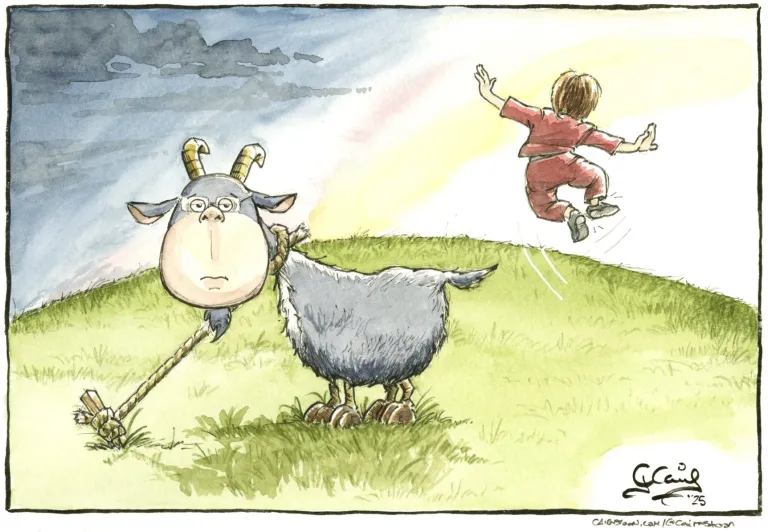
Forget Sturgeon’s claim of being “cleared by the Police” and “not a scrap of evidence against her”.
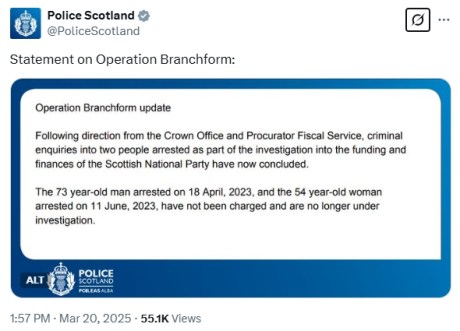
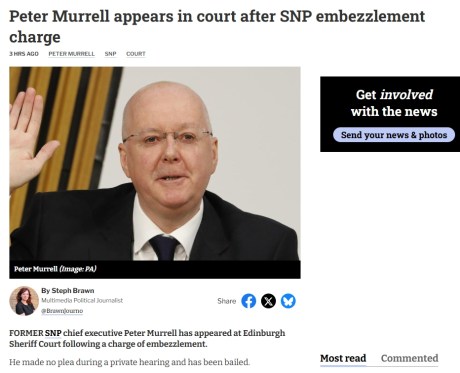
The only statement by Police Scotland – as “directed” by the Crown Office – is below. I believe that she (and Colin Beattie) will appear at the High Court as Prosecution witnesses. In my opinion, Murrell is taking the rap for her. What deal could have been struck?
Hereinafter follows a comment by the Rev Stuart Campbell published on “Wings Over Scotland” on 20 Mar 2025.
But really, what even is there to say?
Two years after she was arrested and taken to a police station for questioning, where we’re reliably informed she simply turned her chair to face the wall and didn’t say a single word for seven hours, the former First Minister will stroll away smirking to a chat-show-and-book-fair retirement as her partner faces charges of embezzling from the party they led like a husband-and-wife Mafia for almost a decade.
Even though there’s public video of Sturgeon angrily warning – some might go so far as to say “threatening” – the SNP NEC not to ask questions about the party’s finances and giving it her personal assurance everything is fine, as Murrell allegedly siphoned off hundreds of thousands of pounds and a “ring-fenced” referendum fund definitely vanished into thin air on her watch, never to be seen again, the Scottish public is expected to swallow that Sturgeon – a self-confessed micromanager who didn’t trust anyone else to do their job – simply knew nothing about any of it and never asked, even when the treasurer and half the finance committee resigned because they hadn’t been allowed sight of the books.
(Something one would have thought it was within her power to remedy instantly.)
Peter Murrell may be guilty or he may not, but this decision is in itself a sorry, crooked state of affairs and no mistake, folks. Sturgeon has been denied the chance to prove her innocence and a cloud will hang over her for the rest of her life, but she lacks the self-awareness or humility to care about that, while the public have been treated like gullible imbeciles, expected to believe the unbelievable without even getting to hear the defence’s story. (Something we at least seem to have in common with the police.)
If we didn’t already know what a farce justice was in Scotland, we might be at least a little bit shocked. As it is, we’re going back out to play with a cat, because when your country is a barefaced laughing stock that North Korea would be embarrassed about, what’s even the point?
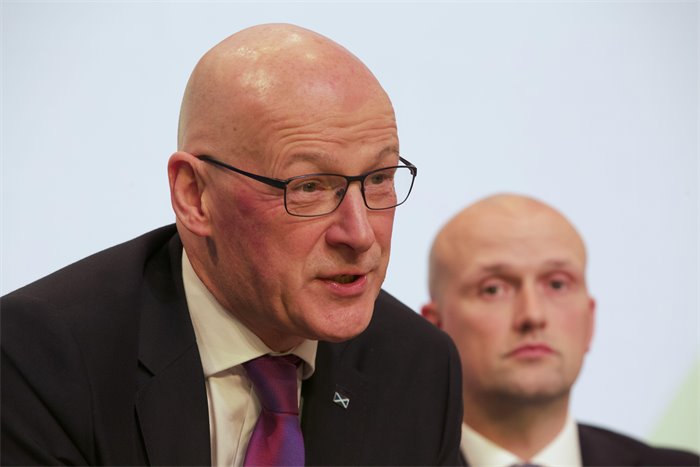
SNP leader John Swinney with Stephen Flynn looking over his shoulder | Alamy
God bless the SNP, may it rest in peace
This is possibly my eulogy to the SNP. A once great institution led by political giants with a clear sense of purpose that captured the hopes of a people and carried a nation to the brink of independence. But as hubris turned to nemesis, like the last days of Rome, it was destined to end in the usual political ignominy with backstabbing, scandal, and in a battle of inflated egos. God bless the SNP; may it rest in peace.
And while it may be premature to mourn the passing of a party that is still mandated to govern for another year and a half and still polling neck-and-neck with Labour, there is no doubt in my mind that, like the parrot, it is no more. It may still be in office, but after 17 years it is a hollowed-out carcass of the formidable force it once was, no longer a serious player as it waits to be buffeted by events it can no longer control.
It’s hard not to grieve for the good old days. To look back with rose-tinted spectacles on those more intimate gatherings in Inverness and Perth when energy, enthusiasm and unbridled hope for a better future fuelled conference debates and kept the bar tabs flowing. To a time when politics was gentler and when there was a kinder discourse, where disagreements could be done well and when the leaders of the future were being shaped and moulded into something resembling greatness. When central figures would not be hidden away but would engage fully, expansively and with just an important hint of humility forged in the backrooms of endless electoral counts where defeats far outweighed successes and helped temper any flirtation with arrogance.
To look back with fondness on a party that, yes, overplayed its holier than thou morality but was also powered by a maniacal desire to make Scotland better – its success rooted in a creative exchange of ideas and a laser-like focus on the prize. To remember with affection the people who were well-intentioned, politically astute, and some set to become the great orators, strategists, and thinkers of our time. And to reminisce on how a long opposition forged a solidarity of purpose and a thick skin, wedding many to the seemingly romantic notion of being locked in a David and Goliath battle that, with effort and persuasion, could be won, which seemed as fanciful then as it ironically appears now.
It’s hard to believe that the party that was once flooded with donations, and ran a slick operation that could stage rock-star-like events in Glasgow’s largest venues, is now the same party struggling for the survival of even its own HQ. It’s mind-boggling to compute that this is the same party that had a leader so bullish he had the chutzpah to declare power by just one seat back in 2007, went on to defy the electoral arithmetic and gain a majority in 2011 and then led the country into an independence referendum in 2014, and despite that result helped galvanize an electorate around a ‘no’ vote and return 56 of the 59 possible seats at Westminster the following year.
How diminished it all now seems. A party reduced to just nine MPs, a fractured group of MSPs including two former first ministers, one still under police investigation, who can lecture about the tax and spend decisions of a Labour-led government while at the same time set up stand-alone companies that allow them to stash the cash from outside interests and potentially avoid making greater tax contributions to the public purse themselves, whilst rarely attending parliament and not even deigning to put in the hard-yards of committee work.
A party where in-fighting, financial mismanagement, cowardice, political missteps, ministerial arrogance, policy failure and scandal now dog its every move. A party that is home to both Michael Matheson and Neil Gray, two men who I always held in fond regard. Decent, hardworking, well-motivated and with seductive back stories rooted in family hardships that propelled them into believing that independence would be fairer for all. Now mired in the same old impropriety that has sunk so many others before. And with a first minister whose only line of defence is to plead for a line to be drawn.
The best thing Flynn could do was to back down and say he got this wrong. Flynn thought he was the oxygen needed to breathe life into a moribund party, but he could yet prove to be the final nail in its coffin.
A proud party, a well-oiled machine, a tight ship with an enviable grasp on its own messaging, now looks tawdry, amateurish and cheap. And yet the stunning sense of entitlement prevails with Stephen Flynn becoming the very embodiment of all that is wrong with a party that has for too long allowed substance to be subsumed by style.
The best career move Stephen Flynn ever made was shaving his head and starting to dress like a cut-price Zelensky. Walk around Westminster and the leader of one of the smallest groups represented there is greeted warmly by all and sundry, not because he’s a better politician than most (he isn’t) or been around for a long time (he hasn’t) but because he’s carved out a discernible identity – even if it is a largely fictious one – of a football-loving hardman, a cheeky chappy unafraid to promote his own ambition.
Flynn’s mistake was that he began to believe in his own hype. He misjudged his popularity, underestimated that of his colleagues, ran roughshod over party loyalty, and risked tarnishing reputations to enhance his own. I like Flynn. I was with him on the day that the news broke that he planned to challenge Audrey Nicoll for selection in the seat she already holds. And in doing so, also retain his seat at Westminster – i.e. double jobbing. He knew that was cause for consternation. And he didn’t care.
I said to him then, and I say it now, for a male to challenge a sitting (and well-respected) female MSP in his own party who herself was selected via an all-woman shortlist was never going to sit well. Flynn hasn’t just exposed a personal hypocrisy and managed to tacitly criticise the abilities of a whole swathe of MSPs, but he has also amplified another nagging issue in his macho attempts to muscle in. That this is a party that has a problem with women. And not just in defining what one is.
I have never heard so much anger in the Holyrood SNP group as I have over the last week. If Flynn has been successful at anything, it has been in finding consensus among an already splintered body of MSPs in their anger at him. The best thing he could do was to back down and say he got this wrong. Flynn thought he was the oxygen needed to breathe life into a moribund party, but he could yet prove to be the final nail in its coffin.
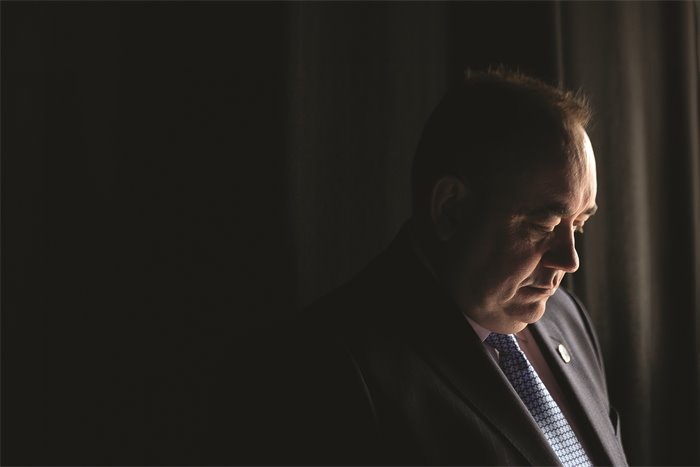
Alex Salmond’s death rocked me more than I could have possibly imagined
Share this page
Alex Salmond used to like telling people he had known me since I had done work experience at Scotland on Sunday as a “wee lassie”, and just look at how I had come on. It was typical Salmond to embellish a story about someone else to get him a bit of a laugh.
And while many a woman might now bristle at an older man describing someone not that much younger than them as a “wee lassie” or even trying to hijack her achievements as theirs, I think it was simply his cack-handed way of saying he was proud of me.
I can’t say his joke at my expense ever bothered me. Then or now.
Neither is my memory of him tainted by the very limited prism through which many now wish to view him. I am perfectly comfortable in the knowledge that he was fond of me, and I him. And, for the record, I was always the thicker skinned.
The truth was that Alex and I met in 1992 when I was a fully-fledged, albeit still very young and relatively inexperienced, journalist working on Scotland’s fledgling Sunday broadsheet, and he was already an MP and the leader of the SNP.
The 1992 general election was his first real test as leader, and I was sent to shadow him on the campaign trail for a colour piece for the Sunday paper. And boy, could he provide colour.
This was the election in which the SNP believed, with Alex at its helm, it would make its electoral breakthrough. So, there I was travelling the north-east with him in an old minibus driven by Stewart Stevenson, along with Richard Lochhead, who worked for Salmond at the time, and Alex’s wife, Moira, who would hand out boiled sweets while giving a running commentary about the towns we passed through and make recommendations for lunch – the Udny Arms being a favourite.
The SNP didn’t make its quantum leap that election. The party went in with five MPs and ended with three. And I can still remember watching Alex on the stage at Macduff Town Hall waiting for his result, already knowing that Jim Sillars had lost Govan and that this would be a grim night for the SNP. There was no hint of what he must have felt inside. And when it was announced he had won his seat, he gave a customary punch to the air and that was it – game back on.
That was Alex. Ready to pick up the pieces and carry on. Never cowed by pessimism, never burdened by disappointment or overly bridled by trivial concerns or minor bumps in the road. He was the great optimist. He had to be. He took a party from the loony fringes of politics into government and a country to the brink of independence. He changed Scotland. He changed politics. He changed me. And that’s quite a legacy.
And yet, in the clamour for commentators to vent their loathing, there have been too many sour column inches that have framed a man’s premature death around the egos of the journalists that have penned them. Too great an appetite to rescue the words that were once filed and then spiked following a trial that didn’t give them the verdict they had prepared for. Too much haste to use his passing as the opportunity to seek revenge for a tongue-lashing or a put-down that they had never forgotten. And worse, a chance for some to jump on a bandwagon and exaggerate a relationship just to claim some plaudits in his death. This was never going to be about him when it could be about them. And frankly, it has been hard to stomach.
How you react to a moment as big as the death of a political titan like Alex says something about who you are as a person. And I am happy to admit that news of his death rocked me more than I could have possibly imagined.
It wouldn’t have been human for me to react in any other way. Upset for a life cut short with so much unfinished business. Grief for a wife who had been at times the real power behind the machine. And sorrow for a reputation that was traduced to a particular characterisation.
I hated the fact that Alex’s trial, metaphorically, put many of us in the dock. Forced into a position of having to choose. For or against, when unarmed with the facts.
And, in this binary world where nuance is absent, to then be pigeonholed either as Team Salmond or Team Sturgeon, which then extended through to views on everything from the complainants in the court case to the gender reforms and the routes to independence.
What a naïve way for life to be viewed.
But expressly on that, I have this to say: I don’t think there is a contradiction in a man who has admitted past bad behaviour towards women also believing that sex is immutable, and that women’s rights should be preserved, otherwise women may find allies in men hard to find. I don’t think you need to be a conspiracist to have serious questions about a Scottish Government process which has already been found to be flawed, penalties extracted, and information still withheld. And I don’t think you need to be a believer in deep state frame-ups to simply wonder who was the Scottish Government leak that gave a newspaper its splash on Salmond and is still to be identified.
But right now, in his death, with his family in mourning, I prefer to remember a powerhouse of a politician who helped shape many of the journalists and politicians of today who now claim some propriety over his memory, and yet decry his legacy. Alex kept us on our toes, and for some that is a further source of ire.
That 1992 election night in Macduff Town Hall was instructive. It helped me properly understand what political conviction looked like. Salmond had a resilience that was repeatedly tested but he didn’t waver, and perhaps it was that inability to be crushed that so many others found just too difficult to counter.
The dreamer has died. It is now up to others to determine whether his vision for Scotland can live on.
I am pleased to reproduce an interview published in Holyrood Magazine on 14 Oct 2024 given by lawyer David McKie. Of all the tributes made to Alex Salmond, this short tribute is the most accurate and heart-felt in my opinion.
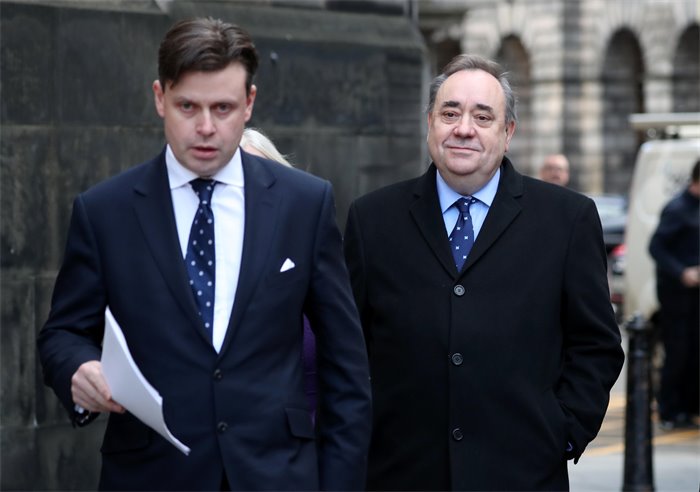
Alex Salmond and lawyer David McKie in January 2019, outside the Court of Session after the Scottish Government was ruled to have acted unlawfully | Alamy
‘Apparatus of the state’ turned against Alex Salmond, says legal team
The legal team that represented Alex Salmond during his criminal trial has said the “apparatus of the state” turned against him.
David McKie, a senior partner at Levy & McRae, said in his tribute to the late former first minister that the treatment “he endured” would have “broken many people, but not Alex”.
Salmond was acquitted of all charges following a sexual assault trial in 2020. He had previously won a civil case against the Scottish Government after it carried out a botched investigation into allegations against him.
McKie commended Salmond as “the real driving force” behind navigating the three-year period during the judicial review, the trial, and the subsequent parliamentary inquiry, adding that he “very quickly grasped the legal issues” and “fought hard to ensure justice was done”.
He said: “While we helped to navigate Alex through three legal processes (judicial review, a trial and the subsequent parliamentary inquiry), the real driving force in all of those processes was Alex himself. He very quickly grasped the legal issues involved and fought hard to ensure that justice was done.
“Alex’s courage and strength of character over the three-year period, from the Scottish Government launching an unlawful process against him, throughout his criminal trial in which he was cleared on all charges by a jury of his peers, to his unimpeachable evidence in the parliamentary inquiry, was absolutely incredible.
“What he endured – the apparatus of the state turning against him – would have broken many people, but not Alex.”
Last year, Salmond went to the Court of Session seeking “significant damages” and compensation for loss of earnings from Scottish ministers.
Veteran Tory MP David Davis, who was a good friend of Salmond, has also previously used parliamentary privilege in the House of Commons to raise concerns about the process surrounding the investigation into the former first minister.
McKie added that Salmond “showed no bitterness” towards his accusers or to the “many others who jumped on the bandwagon to condemn him.”
McKie said: “He remained utterly determined to see justice done but showed no bitterness or anger towards his accusers or to the many others who jumped on the bandwagon to condemn him, even before any evidence had been produced or presented.
“Instead, he simply focussed on the evidence and understood, unlike many commentators at the time, the importance of the due process of law. While some individuals, for whatever reasons, remained critical and sceptical (even after his legal victories, all of which were grounded on the evidence), his friends and his true supporters, as well as those who respect the rule and process of law, recognised and respected his complete vindication.”
I am pleased to copy below the “open letter” from Jim Sillars, a former Deputy Leader of the SNP, to all “fellow members”. It is quite hard-hitting and is a plea from an icon of the Party before it is just too late to save the SNP and its fundamental aim of Independence for Scotland. Please think about it.
From Jim Sillars Open Letter to SNP Members 8th July 2024
Fellow Members,
Someone has to tell the truth
You will not like what I have to say. But someone has to tell you the truth. What makes me so arrogant in claiming I am able to do so? Well, I am at the end of my political life. My ambitions are behind me. Also, I have been proved right in my critique of the leadership over the past decade, and saw last Thursday coming. A week before polling day, I told journalist Alan Cochrane, off the record, that the SNP would only win 12 seats or fewer. There is also my experience of catastrophe and recovery. It took 8 years from the defeat in 1979 before the people were willing to listen to us again. If you don’t fancy a repeat, please read on.
How we got here
I see in reaction to the catastrophe of last Thursday that there is much talk of “reflection” by our leadership, the National, and a fair number of members of the party. Reflection? No. It should be repentance, because 4th July was inevitable given how the Sturgeon/Swinney era misled the movement, lost its common sense in government, promoted marginal issues as national priorities while the real priorities of the people such as education, housing, NHS, infrastructure, were notable only for the staggering level of incompetence with which they were dealt with. Whether the leadership has the grace to repent is of no matter. It is a busted flush. The people have no regard for them. Last Thursday wasn’t about who the Scots sent to Westminster, it was a referendum on the Scottish Government, and a condemnatory verdict was delivered. Few of the people, and it is they who matter, have any faith that the ones who have run a failed government can, by discovering some hitherto unknown ability, take its governance performance to a better level. If the SNP is to recover, as it must if the independence movement is to have any hope of achieving its aim, the party’s members should also realise that they have cause to repent. You acquiesced in changes to the constitution which shifted all power to a leadership cult, with the party then run by Stalin’s wee sister: imposing a politburo of two exercising an iron grip on the organisation, and the annual conference. When you had doubts, you hid behind the mantra of Wheesht for Indy, letting error build on error. You made the mistake of believing that if you openly criticised the ineptitude of the Scottish Government, you were damaging the idea of independence, when in fact by not calling them out that is exactly what you were doing. You got so used to not thinking for yourselves that you allowed the party to be hollowed out intellectually. Intellectual rigour, an indispensable tool for policymaking disappeared when you clapped Nicola’s repeated claims for another referendum, seemingly unaware that the SNP had become just the referendum party committed to the suicidal policy of putting the cart before the horse. Be grateful Westminster refused to give her one. A mistake they will come to regret. You kept quiet too when Nicola made it explicit that the last Holyrood election was not about independence, but about her. No sane party or politician wants a referendum when support is only around 45%. The political challenge is to campaign to get to 54-55%, a level which enables you to set the agenda and demand, get, and win the referendum. What if they still refuse? At that level of support you could bring Scotland to a standstill every day of the week, and generate a power that could not be ignored.
Time to take back the power of the party – Steps that should be taken for recovery
We can put away the sackcloth and ashes if the members face up to their responsibility for what has happened and recognise the need to re-assert their power and importance. Only you can reconstruct the party to take back power from the leadership, and rebalance the relationship when it is in government. Only you can restore the party as the prime policymaking part of the movement. Only you can demand that our government concentrates on the real problems that face our people.
The Party.
Branches should demand an emergency conference. Change the constitution to make the NEC no larger in number than 25, with all of them to be directly elected by annual conference. Make up: 20 from the membership, the Leader, deputy Leader, one youth wing, one MP and one MSP. General Secretary to attend. NEC to be chaired by the Leader. Vice Conveners drawn from the NEC: Policy, Finance, Youth. Responsibility for SNP policy in setting out the case, as it develops, for independence to rest with the NEC after getting directions from conference, whether the party is in government or not. There is talent for that purpose in the membership, and the NEC should re-establish Academics for Independence as a source of specialist advice. In government the SNP Cabinet should concentrate on delivery of the devolved services. Abolish the post of Chief Executive and replace with a General Secretary elected for a four year period, responsible for the organisation, campaigns, and full-time staff, thus providing an authoritative voice for the membership able to speak as an elected equal to the leader. When the SNP is in government, a 5 person liaison group drawn from the NEC, which will include the General Secretary, to meet the Cabinet monthly to discuss government policy. Leader of the Westminster group to attend. National Council to meet twice between annual conferences, with the leader, General Secretary, and Vice-Conveners to submit written reports on their work, with each to be open to a question session.
The Movement.
The independence movement is split and splintered. It would be easy to brush aside ALBA as a party given their paltry vote. But what of the people who left the SNP to join it, and others who left it, many of them with long years as activists? Would it not be sensible to get them back in our ranks, able to believe in the SNP again because of the reconstruction suggested above – a party in which they can believe in again. We need their talent and energy. Then there are others: twenty-one separate groups are now active in the movement. All of them doing good work on aspects of the case for independence (most former party members) but no co-ordination, and so no coherent message being transmitted to the people. The SNP no longer stands alone in the independence landscape. But it remains the political wing of the movement, and its electoral successes and failures affects every other part of it, and its success in elections will in the end determine when independence is achieved. That is if it survives. Survival depends on learning the lessons of the past wasted decade. The time is ripe for a reconstructed SNP to reach out to all others in the movement, and create a national Yes organisation, not as an SNP front, but with the party in partnership with the others.
The Scottish SNP Government.
A good number of the present cabinet have to go, and be replaced with people of ability who have been consistently overlooked. Scottish Government ministers have been on a carousel: getting off from one office, only to get back on to another one, irrespective of how they performed in the first one. The members should demand a clear-out.
There is still time before 2026
The present situation, the one that caused the catastrophe, can be corrected by a reconstructed party and a “new” cabinet. Alex Neil has sent the present one two papers, one on financing a massive housebuilding programme with institutional investment funds, and the other on sorting out the immediate problems in the NHS. There are also ways to fill that financial black hole without asking Westminster’s help, or blaming it for a refusal. We can levy a land valuation tax. We can cut the number of education authorities, 32 since 1993, and shift money from 32 administrations to the classrooms, by creating Joint Boards. But those policies, and others, require ministers with willpower, a knowledge of how to govern effectively, imagination, and the competence to apply them. All of the qualities that are not there in most of the present government. There is still a case for optimism. Support for independence remains high. The case for leaving Broken Britain is a strong one. But to make it, to anchor it in work that is incontestable because the homework has been done, the party has to be reconstructed and the tarnished old guard has to step aside. Whether that happens is up to you. It is a responsibility you cannot escape. Another 2024 beckons in 2026 if you dodge it. And if you dodge it, you will be dealing what could be a fatal blow to independence.
This is the title of a leading article published by Mandy Rhodes, Editor of Holyrood magazine on 29 Oct 2023, not long after Nicola Sturgeon made her triumphant return to appear before SNP diehards in Aberdeen before during their Annual Conference.
In my opinion, it is a brilliant piece of writing, capturing all the questions about Queen Nicola’s rule and her sudden abdication earlier this year. You may find it by clicking on the following link:
1. When I joined the SNP in 1974, a mandate for Independence would be obtained when the Party won a majority of the Scottish MPs sent to Westminster. This “Big Bang Theory” was accepted by (almost) everyone, including Margaret Thatcher and, way before her, Winston Churchill. Devolution changed everything in the 1990s when Alex Salmond persuaded most Nationalists (including me) to accept Devolution as a “first step to Independence”. “If only we could show the poor Scottish people that, with limited self-government powers, we could make a go of running things for ourselves, surely the path to full-blooded Independence would be obvious!” This route was to prove an unattainable mirage.
2. Salmond put far too much faith in Nicola Sturgeon in the old days, thinking he could control her. While he attended to constitutional and economics matters as FM, she was his deputy who had free rein over health, social care and other social matters – a huge remit. He trusted her, which he must bitterly regret now! However, she was not on the same personal agenda which I have discovered in my research. Whether they had a “lavender marriage” or not, the Murrells, Peter and Nicola, had a plan for private power and control in political life. I believe Salmond, who is on record as objecting to the pair being at the top of the Party and Government, stated when he was on his way out as FM. It was too late then and the Murrells just ignored him. He should have done something about it when he was in power, not complained afterwards. A few high-profile people, such as Kenny MacAskill, objected but it was also too late. Since then, Sturgeon has successfully ridden two horses as Leader of the Party, with her husband as a mere apparatchik, and, separately, as First Minister, . She has successfully convinced many people – for example within the MSM – that she has Chinese walls in her brain. No pillow talk between the Murrells, of course!
3. One crucial thing that Salmond did was introduce a popular referendum of the Scottish electorate as a necessary step to go through to achieve Independence. “Surely after achieving a majority of SNP MSPs at Holyrood (as in 2011 but not repeated since then) and at Westminster (as in 2015 and thereafter), we could win a referendum of the people”. But it was not to be.
4. This alternative Gradualism (akin to “Steady State Theory” in Physics), plus a a steady Party growth, allowed the SNP to attract: (a) lots of mediocre carpet-baggers who saw a career at Holyrood, one that they couldn’t achieve outside, and (b) lobby and other action groups to latch on to this new rising political movement, not just the usual lefty-liberal types but emerging forces like Feminism, LGBT and others, who seldom saw the pursuit of Independence as their cause, but a suitable “local” vehicle to associate with. These groups returned little to us but Sturgeon (and others) were receptive, new forces within politics to court – and with her particular persona and psyche, she reciprocated.
4. From 1999 to 2007, SNP MSPs were mostly people with real-life baggage with them. In other words, they had earned a living and inhabited the outside world, free from immersion within the political bubble. Salmond did the right thing in 2007 in assembling a pretty competent government who didn’t make too many mistakes. The message was minority, but competent government. Sturgeon was one of the few who didn’t have much experience after she qualified as a solicitor – and a chequered short career it was too. Our circumstances changes in 2011 when in the Scottish Election we were able to “game the electoral system”, winning 69 seats out of 129 (53% of the total) with only 46% of the vote. (Labour choose the wrong “game” by concentrating on constituencies with no dual nominations to constituency and region.)
5. We lost the Independence Referendum in 2014 by 55.3% to 44.7%, a huge margin of 10.6%. In my opinion, Salmond was wrong to resign – stupidly he thought he could still control Sturgeon who was “crowned” with his blessing. Big mistake. The MSP 2011 input had produced a cohort who often thought, largely, that they could rule the world but they had little experience of the actual world outside politics. Few had earned a living in trade, business and the professions. The result has been growing governmental incompetence ever since.
6. Nevertheless, the Government and many MSPs were easy meat for Wokish lobby groups, either due to: their own orientation, being flattered by attention, seeking an easy, cumfy life, or occasionally thinking they were doing good. Also, the Party has been completely corrupted internally, starting in 2017 with the abolition of National Council and the reduction of ordinary member representation and the proliferation of overlapping special interest groups on the NEC. Now NEC controls everything, including direct candidate selection, through the Murrells, Angus Robertson (predictably), Michael Russell (sadly) and several others in the Nicola band of acolytes. Conferences for many years are just Nicola fan-club rallies.
7. There will be no indyref2 next year and Sturgeon and her coterie will play us for sheepish fools until the Party collapses or they leave at their own choice.
This is the story of many organisations, not just political parties. A complete change, either internal generated, or forced upon it, will be required to reverse out this nasty cul-de-sac.
There is a most interesting comparison between the time when Alex Salmond and I (at different times) were expelled from the House of Commons, and what took place with Kenny MacAskill and Neale Hanvey on Wednesday. The comparison is with the demeanour and language of the Speaker, and the underlying reality.
When we disrupted proceedings it was on one of great days in the parliamentary calendar – the budget. The Speaker didn’t lose the plot, show any animosity, stuck to the well knownscript for such occasions, named us, and when we didn’t move, the then Leader of the House, again with his own script always at hand, moved that we be suspended, with his motion then subject to a vote. Only after the vote did we leave.
When we did it, the SNP was a minnow group of MPs, representing a party which at that time seemed to pose no real threat to the British state, and so could be dealt by the Speaker with what was the usual way with bad boys misbehaving in the club. We were, of course, barracked by the Tory and Labour backbenches, and stood our ground in what was a hostile atmosphere. But the Speaker was cool, and after we refused his order to sit down, left it to the usual procedure conducted by the Leader of the House.
Not so with Speaker Hoyle on Wednesday. Although Kenny and Neale are no longer in the SNP, on the issue they sought to raise, who has the right to hold a referendum, the elite holders of power in the British state see them as no different from the Blackford group – asserting a position endangering that state. Unlike when Alex and I were there, there is now a perceived real threat that simply will not go away.
Result? Anger, frustration, intense dislike, fear of and fury at what Kenny and Neale stand for boiling over. No mere barracking from British party backbenchers, more like a baying mob. No smooth reading of the usual script from the Chair, but face contorted and coarse snarling language to “shut up and get out.” Speaker Hoyle’s reaction was a giveaway. He did represent the majority in the Commons. They know that the drive for independence is not going to be smothered by repeated rejections for a referendum, and his reaction showed just how much they resent what is to come.
I am very pleased to reproduce below Jim Sillars’ excellent essay on SNP First Minister’s reign since she was “crowned” after Alex Salmond’s resignation in 2014. In my opinion, it is a hugely important and is published here with full permission of Jim Sillars and Iain Lawson, the owner of the blog “Yours for Scotland” where Jim’s original analysis was published. Readers who wish to comment on the essay may make their contribution by clicking onto Iain’s blog at:
An essay by Jim Sillars to mark Nicola Sturgeon becoming the longest serving First Minister since Holyrood was created.
Nicola Sturgeon is now the longest serving First Minister. That fact in itself means nothing. The measure of her is in what she has or has not accomplished, in building rock solid majority support for independence, and whether under her leadership, in the areas of legislative and executive competence available to a Scottish Government, she has improved Scottish society.
As a convert to independence (I was first elected to Westminster in 1970 beating an SNP opponent) I would be delighted to record here that under Nicola Sturgeon’s leadership Scotland has become an exemplar of what a good society should be – vibrant with a debate noted for its respect for others who differ, free to think and speak openly, our youngsters leaving school well educated, endowed with the ability to think critically, entering an economy offering them wide opportunities, all inspired by a government at Holyrood sparkling with talent drawn from back benches whose members have the spunk to hold their own to account. That Scotland would be a self-confident nation, with a large majority ready for the next step to full sovereignty.
I cannot write and say that is so, because it is not. In 2014, when Nicola Sturgeon took command of the SNP, party and government, Scotland was vibrant: we had just had a great debate with the voter turn- out in the September referendum the highest ever. Today, however, Scotland is widely regarded to be in a state of stasis, with the SNP party’s internal democracy emasculated, its members in thrall to the cult of personality, and Scotland’s government, politics and economy stuck in the quagmire of mediocrity. Nicola Sturgeon is in total control of the party and government, so the responsibility is hers for failure to build that rock solid independence majority, for the deplorable state of Scotland’s education, health service, transport infrastructure, blunders on energy, and all round dispiriting incompetence.
Scotland, the source of much of the Enlightenment, now has a people, due to her legislation, afraid to think and speak freely, because speech can now be a crime. On the constitutional issue, her inability to be a genuine national leader who makes explicit that both positions are legitimate, and so entitled to command respect as between opponents rather than as enemies, has allowed the debate to become toxic, and the nation bitterly divided. “A nation divided cannot stand,” does not mean in our case the nation annihilated. It means what we have now – a nation so at odds with itself, that its division on the constitution trumps everything, with the result that we are not even standing still, but going backwards in a world where, with the rise of the Indo-Pacific region, we face the most intensive competition for trade and wealth creation.
I am not surprised that Nicola Sturgeon is a failure where it matters. I have never had cause to reconsider the view Margo MacDonald and I held of her when she was part of the Alex Salmond coterie: an articulate expounder of a brief, an effective attack dog on the opposition, but narrow, dogmatic, lacking imagination, and without that sweep of the intellect, and breadth and depth of thinking, that marks out politicians of the first rank from the rest. She is a machine politician: tomorrow’s headline hunter, the pursuer of the celebratory selfie, the aficionado of political fashion – reluctant to define a woman – and incapable of thinking big. She has been a major speaker at umpteen party and other conferences over many years, but I doubt if anyone can remember even one that contained an original idea, or formed a phrase that inspired them to a new level of belief, and will always be remembered.
Yet, she has won election after election, so is there some hidden genius that I and other critics have missed? I don’t think so. At Holyrood she has “won” elections, but not a majority of seats and votes, something due more to the split in the unionist vote, and the abysmal level of the opposition parties both inside and outside the Holyrood chamber, than to her own abilities and record in government. Opposition party leaders don’t seem to understand that FMQs are about questions, penetrating, persistent questions, and that starting off with mini speeches is a gift to a minister, who can pick and choose which bits to answer. Nor do they seem to get it, that you need to attack a government not only in parliament but outside, among the people, day-in-and-day out. Hitting the First Minister’s ego and temper now and again, is nowhere near enough. Nicola remains lucky in her opposition
: Labour still hasn’t got its head around why it fell from power, and so remains in a tangle over the Scottish question, while the Tories have yet to find someone with the popular touch to replace Ruth Davidson, and so get people to listen to them.
Another factor explains the SNP electoral success despite its failures in government. I doubt if she was the originator, but has certainly been the electoral beneficiary of the “Wheesht for Indy” mantra that says ignore all the faults and failures of the SNP government because they are for independence, and that to criticise them will only help the unionists. I have met people who can recite all the failures, but say we must remain quiet lest we damage the government’s image, and so in turn damage the very idea of independence. Nicola has kept around forty per cent of the people in that trap of being deliberately silent, by managing their desire through her never ending boasts of delivering another referendum. Neither she nor they seem to grasp that there is no point of a referendum unless you are in a position to win, and that you don’t win unless you campaign and build the independence vote. That is precisely what Nicola Sturgeon and the SNP has not done.
The burst of the independence vote beyond the fifty per cent mark in opinion polls, when Boris Johnson was at his worst during the pandemic, was never real and did not last. Support for independence is roughly where it was in September 2014, almost 8 years ago. Back then a national organisation was in place, people were, surprisingly, not down hearted and many of the local groups stayed in being. Taking over from Alex Salmond, Nicola Sturgeon was in a perfect position: maintain that nation-wide base, engage it in continuing the campaign, and use its energy to build upon the forty five per cent gained in the referendum. But, of course, that would have meant she and the SNP only having a say, not total control, because there was more than the SNP in that national effort. But Nicola and control go together. And so that great national machine, embracing thousands, was allowed to decay and die.
Today’s independence movement is made up of disparate groups, who march instead of thinking, split and splintered, with no threat to the grip of the SNP. That grip is a negative one. Wicked Westminster is the bolt hole she invites her followers down when it would be uncomfortable to face the reality of Scottish failure. Without doubt, she is the author of the grudge and grievance policy that is injurious now to Scottish-English relations, and will poison the atmosphere when Scots sit down, post-independence vote, to negotiate a treaty with England on our exit from the UK. I often wonder if Nicola gets it: that Scotland will not be independent on the day after a Yes victory, no more than the UK was out of the EU on the morning after the Brexit vote. A treaty will be required, to set the day of independence and much else of supreme importance to both states. Create and continue bitter relations now, and you may well get bitter people on the other side of the negotiating table.
Scotland is a nation of five million, England a nation of sixty million, by far our largest export market. We are bound by geography in one island. Good relations in devolution times should pave the way to good relations when and if we separate and map out how we co-operate on security, borders, trade, foreign, defence, energy, free movement of people, and cultural relations policies. That kind of expansive forward thinking, which includes understanding England’s national interests, is beyond our First Minister who revels in difference, and manufactures it when it doesn’t exist, even to a petty level, as was the case with the national census, now rendered useless. Hostility between Holyrood and Westminster has become her creed.
She is in the class of what I call big N nationalists, who define themselves in relation to England, and are moulded by the feeling that Scotland was dealt a bad hand in 1707, and seem glued to the idea that the grounds for independence must be complaint of being deliberately ill done by, by our large neighbour. During my sixty years in politics I can point to the negative consequences, the ignoring of a special Scottish interest, in policies made in London, the political and economic centre of a country badly divided in terms of wealth between the South East and the rest. The discovery of oil in the 1960s, and the centralisation of North Sea policy in the UK capital, with calls for a specific Scottish share scornfully rejected, is a classic example. But the case for Scottish independence does not need to be based on antagonism towards England. It can be better expressed in a positive way as a matter of Scottish state interests which, in the 21st century, as distinct from the position in 1707, leads us away from union with a larger country now divested of empire, its relative influence in the world diminished, and whose economic management in these circumstances has proved less than dynamic.
Those are post-empire forces born of historical development, with sometimes damaging consequences for Scotland economically, for which no contemporary English group, being unable to reverse them, are culpable. People in North East of England could make the same observation, but unlike Scots, who joined the union as a state, and have remained a distinctive polity, they do not have the same options as us. I have yet to see Nicola Sturgeon and those she is leading, express the case for independence in that way. She appears to prefer inventing Westminster as a malign bogeyman from whose clutches we must escape.
But let us now turn and deliver judgement on those areas where devolved power makes the Scottish government as autonomous now as it would be were Scotland fully sovereign – where the buck stops not with Boris Johnson, but the First Minster. We could pick out the CalMac ferries fiasco, and ask how Nicola Sturgeon could launch a ship with painted windows and, apparently, a false funnel, and not ring the alarm bell within her government that something was seriously wrong. We could pick out the juvenile handling of our Saudi Arabia of wind status, with the government pocketing only £700 million while others will waltz away with many billions. Or the current lesson on how not to take public ownership of our railway. But it is in the educational management of our greatest national asset, our young people, that we find failure heaped upon disastrous failure: a moral and economic catastrophe the responsibility for which rests with she, who once asked to be judged on her education policy.
Hogging the limelight back then, it was the First Minister who bragged about closing the attainment gap between schools in deprived communities and the more affluent. This week, hiding in the shadows, through the mouth of her education minister, she shamelessly abandoned the children of the poor.
Education must be seen in two contexts. One concerns the child for whom, on moral grounds, the education system should stimulate a desire for knowledge, with the gift of a growing level of literacy creating the ability to expand that knowledge, and so imbue each individual young person with a sense of self-worth and self-confidence sufficient to ignite personal ambition to achieve in life. The second is the economy: it is imperative that our children are equipped to earn their own income, and the nation’s, in a world where countries that were once basket cases (China), struggling (India), under colonial control (Africa) are now creating new middle classes whose children are pouring out from universities as graduates in the sciences and technologies, brilliantly creative and fiercely competitive. Where stand our children in that world arena? Literacy levels tell the devastating truth – primary schools in deprived areas 56 per cent, only 80.7 per cent elsewhere.
Instead of enhancing their position as participants in the world economy, SNP education policy handicaps them. They and the nation will pay a heavy price for that failure.
Although her record is strewn with error, Nicola Sturgeon looks and feels safe, untouchable, “Supreme” as one newspaper described her. But failure after failure, blunder after blunder, levels of incompetence that are impossible to hide, eventually take their toll of reputation. Democracy has a habit of catching up and dismissing politicians who promise and fail.
ALEX SALMOND HAS PULLED HIS RT SHOW BUT IS THIS GOOD ENOUGH?
I was content that he and Tasmina secured a slot for his weekly Show on RT, despite Sturgeon’s views to the contrary . I have watched most of the episodes. Alex is an excellent host, and it is well produced by Tasmina. I, of course, accept that Kremlin-owned RT had not even attempted to exercise any form of editorial control over the Show. “The Alex Show” (and several other programmes) have provided credibility for non-Russian viewers in the UK and elsewhere.
However, things have changed and we should not forget that RT stands for “Russia Today” and TODAY Russia is invading a neighbouring independent country, Ukraine. It’s quite blatant. Vladimir Putin, in my opinion, is an unreconstructed former KGB Colonel in Leningrad (sic) and quite a rational megalomaniac, states that “Ukraine has no right to exist” and “is an artificial country”!
What does Alex mean when he writes ” … until peace is re-established?” Who decides that? Is that when Russian subjugation of the Ukrainian people is achieved and there is no overt fighting? There is nothing “statesmanship” about that.
Alex is just giving our opponents ammunition to lob back at us. Sturgeon and her clique are having a field day. He has not even identified President Putin as the Russian aggressor-in-chief. The unambiguous naming by Alex would certainly test his editorial independence in RT broadcasts!
I have been dipping into RT News bulletins over the two days and can scant mention of the thousands off demonstrators on the Russian street “Against the War”, or the near two thousands who have been already arrested for that offence. It’s one thing to demonstrate in Edinburgh or Glasgow, but in Moscow against the Putin regime?!
In the world of “real politik”, Alex has made a big error and I fear it will act against the ALBA Party in May. Older readers may remember the personal stand in a BBC UK-wide broadcast in 1999 he took against NATO bombing of strategic targets in Serbia when the Serbs were carrying out a murderous campaign of ethic cleansing in the later new independent Republic of Kosovo just before the first elections for the first new Scottish Parliament. In my opinion again, it could have cost us seats in that first Parliament. Was that “statesmanlike”?
Alex condemns unacceptable abuse against Tasmina, as I do. Further, he called for prayers against any “escalation” of the war. I assume he means the military invasion of independent Ukraine by Russia but apparently can’t can bring himself to say these words. I wonder why?
Over the last couple of weeks I have been trying to articulate my thoughts on the outcome of the Alex Salmond trial and his acquittal and, in light of my own experience, consider what implications this could have for the SNP and the historic and unique Moorov Doctrine in Scots Law.
Alex was charged with 13 counts of sexual assault against nine women and, after a two-week trial by a female-majority jury in the Edinburgh High Court, the verdict was quite clear: Salmond was found not guilty of any “criminality” in 12 charges, with the last charge determined as being not proven. A jury had cleared him of all charges. Although Salmond’s defence team admitted some “inappropriate” behaviour with female staff and colleagues, they were successful in convincing the jury that nothing was criminal or illegal in his actions.
The Salmond trial has occurred at the time when I am currently engaged in completing Volume Two of my memoirs, entitled “Politics in My Life”, and it has caused me to re-consider the behaviour of the SNP hierarchy in the lead-up to my own nine-day trial in 2013. My own trial was conducted in the lower Edinburgh Sheriff Court with no jury. I was found guilty of 23 charges of domestic abuse against three women by a sheriff sitting alone.
Prior to my trial, the behaviour of the leadership of the SNP, which I had joined in 1974, caused me great distress in 2011, not long after I had been elected as SNP MSP for Dunfermline. In my case, the SNP leadership were made aware of accusations against me in 2008. Instead of informing me at that time of these complaints, they secretly retained this information, allegedly conducted a covert investigation without my knowledge and only subsequently advised me in 2011.
It is incredulous to believe that when my my former wife’s former brother-in-law, Robin Armstrong, walked into the Constituency Office of the then Deputy Leader of the SNP, Nicola Sturgeon, to make complaints against me, that she was unaware of these complaints. Indeed, I suspect most people would suggest that it be inconceivable, given Nicola’s close relationships with Mhairi Hunter, her Constituency Office Manager who received these complaints, and Peter Murrell, SNP Chief Executive and Nicola’s soon-to-be husband at SNP HQ, who received Mhairi’s Complaint Report that same day.
When in 2010 I took steps to get on the SNP’s “List of Approved Potential Parliamentary Candidates” for the upcoming Scottish Elections in May 2011, at no stage of the very inquisitorial vetting process wasany reference made to any complaint about me. I did, however, confirm in my application my appearance in the civil court as part of previous divorce proceedings.
It wasn’t until September 2011 that I was called in to SNP HQ by Ian McCann, Corporate Governance and Compliance Manager, to tell me that “a complaint had been received about me” – some three and a half years previously! I was flabbergasted. At my request, I was given a copy of the Complaint Report to Peter Murrell, although McCann had no explanation of why this complaint had not been disclosed to me sooner. I responded to these allegations in writing, all with relevant references. When I submitted this documentation and asked what would be done with my responses, he answered: “Nothing at present. We’ll just keep it on file, in case it’s ever needed”. His parting words to me were along the lines of: “I suggest you destroy/burn your copy of the Complaint Report on this matter”. I didn’t, of course, do that.
Nevertheless, having been previously suspended from the Party in March 2012 following a Sunday newspaper report, I was then expelled the following month for apparently not completing an application form “correctly”. I was treated as persona non grata by the Party. I had been well and truly “dumped”, albeit this did not extend to most members in my constituency and many MSPs in Parliament. In fact, I was widely encouraged to fight the suspension and appeal the later expulsion.
I notice that Alex Salmond said after his acquittal that he had wished to the raise certain issues in his defence during his trial, but was legally unable to do so. Now that he has been acquitted of all charges, I await with interest his disclosure of the evidence he believes demonstrates the ‘political conspiracy’ against him by the SNP and the Scottish Government.It is deeply disturbing and ominous to think that the SNP may be sitting on dossiers on ordinary activists and elected members to potentially use against them at a later date. However, as my own and Salmond’s more recent treatment indicate, these dangerous tactics appear to be embedded practice in my former party. I await a thorough cleaning out of the SNP at the top. The Salmond disclosures promise to be revealing, to say the least.
Of course, both in my case and in Salmond’s, the prosecution in court sought to deploy the Moorov Doctrine. Indeed before asking the jury to retire to consider their verdict, the judge in the Salmond trial, Lady Dorrian, reminded members of the jury of the existence of the historic and unique Moorov Doctrine in Scots Law, under which all or some charges in an alleged pattern of behaviour could be judged to corroborate each other, even though none could be proved in their own right. Happily for Alex Salmond, the jury appear to have decided that, certainly in 12 of the charges, there was a “non-pattern” of accusations from eight of the complainers.
In my own trial in 2013, the sheriff, Mrs Mackie, was “judge, jury and executioner” and did not have the encumbrance of a jury to deal with. She alone decided that the Moorov Doctrine (intended originally to apply over a short term for sexual charges) could apply for all 23 historic domestic abuse charges over the 27 years period from 1967 to 1993/5, without any individual allegation being specifically proved. Indeed, I believe objective documented defence evidence submitted disproved several of the prosecution claims but, apparently under the Moorov Doctrine this could be disregarded.
A number of judicial writers have questioned the operation of the Moorov Doctrine over the years. It may have been acceptable, indeed appropriate, in Glasgow for a sexual assaults case when it came into existence in 1930 but, nowadays, with so much electronic, documentary and other forensic evidence available from a multitude of sources, the days of the Moorov Doctrine, should be numbered. Its use has now spread widely to many branches of the criminal law. I look forward to a serious judicial review of the Moorov Doctrine and its applicability today in Scots Law. It does not exist elsewhere in the UK.
References:
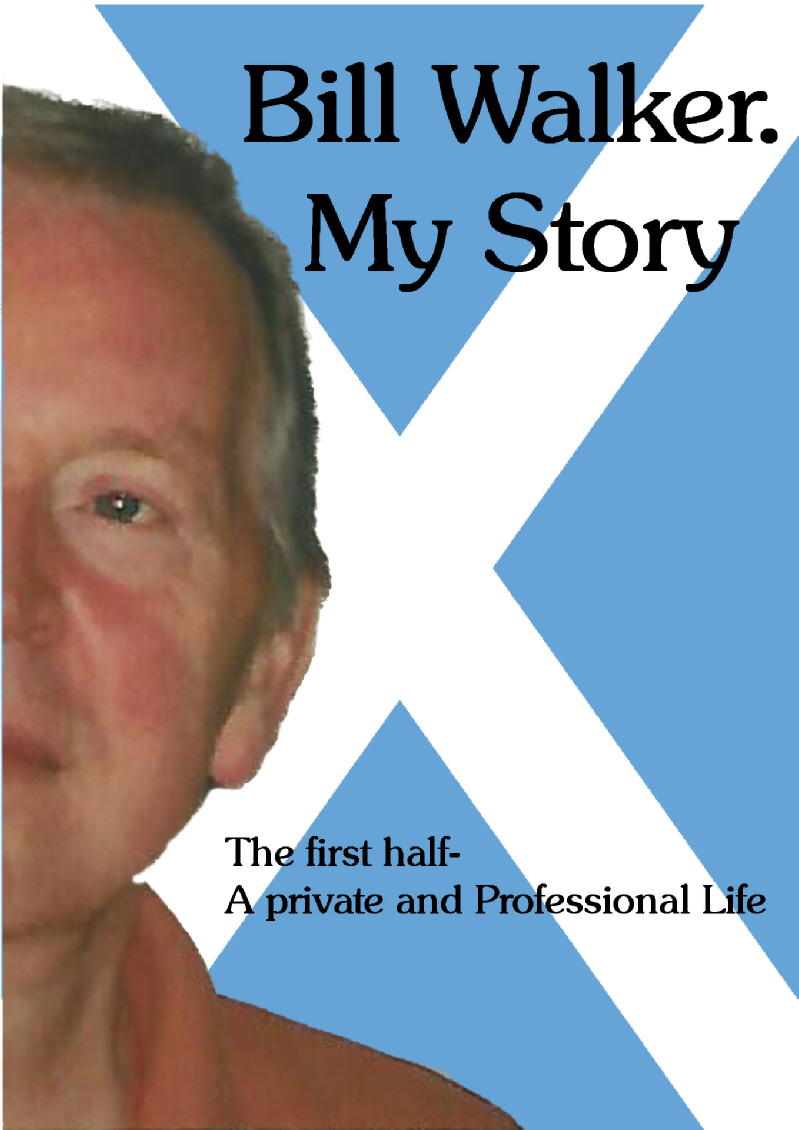
1. “Bill Walker: My Story – Vol. 1 A Private and Professional Life”, Amazon Books, September 2017
2. “Bill Walker: My Story – Vol. 2 Politics in My Life”, Amazon Books, due to be published later in 2020
I was very saddened to learn of the death (12 May 2019) of Joe Miller, a great and supportive friend, in Dunfermline.
I have known Joe for many years. He was a great patriot and a long-term fighter for the Cause of Scottish Independence. A prolific writer to the press, Joe’s letters were always concise and cogent, a style I longed to copy but failed in miserably. Always gentlemanly and polite, Joe’s manner was focused on the substance of an argument and not on the personalities involved.
At the time of my campaign to win the Dunfermline seat in the 2011 Scottish Parliamentary Election, Joe was Convener of the Dunfermline Constituency Branch of the Scottish National Party (SNP). Together with my Election Agent, Alan Stewart, he kept me on the “straight and narrow” and helped organise all the other volunteers in that successful campaign.
After my resignation from Parliament in September 2013, Joe and his wife, Joellen, were very supportive and helpful to me and my wife, June. Perhaps the largest legacy to me was his assistance with Volume One of my autobiography (Bill Walker: My Story) published in September 2017. Joe was always attempting to curb my tendency towards verbosity and recently finalised his Foreword to Volume Two, due to be published later this year.
Ever the courteous gentleman, I shall remember Joe fondly. My thoughts are with Joellen and their children, Carol and William, at this extremely sad time of loss.
I must apologise for the delay in publishing Volume 2 of my autobiography “Bill Walker: My Story”. Especial apologies to those readers who planned to acquire this book as a Christmas present!
Volume 1 concerned my “Private and Professional Life” and has generated a lot of comment. It was very detailed but not one request for a correction has been received! The same diligence is being applied to Volume 2, now entitled “Politics in My Life”. This is taking a bit more time than anticipated due to additional material to be considered following recent research.
So, sorry about all this but keep checking this blog for updates.
Slainte
Bill Walker, former MSP for Dunfermline
All correspondence to williamgwalkerpublishing@gmail.com
I’ve had another “Letter to the Editor” published in The Sunday Times yesterday (23 Sep 2018,page 28), following my previous one last month. It was on Brexit and Theresa May’s meeting in Salzburg last week and is reproduced below.
Salzburg is a lovely place to visit but evidently not for any type of “negotiation”!
Last month you published my letter on Brexit in which I said “we shall get nowhere by simply being nice to people”. And so it has come to pass in Salzburg.
Of course, as good neighbours we must continue being civil with our existing EU partners but with a clean leaving date on 29 Mar 2019. We should pay our legally required bills and then seek, separately, free-trading arrangements with the remaining EU and the rest of the world. Any border issues between the UK and Ireland are a matter for those two governments
Each convoluted move to appease the divided Conservative Party and suck up to the EU hierarchy is doomed. Let’s get on with it.
I was so impressed after reading Lord David Owen’s Comment article in The Sunday Times of 05 Aug 2018 that, after a gap of five years of writing to the Press, I submitted a letter in support to the Letters Editor.
This was published yesterday (12 Aug 2018) as the lead letter in a section entitled “Efta is the best deal we’ll get”. I reproduce it below but have reinstated some text which, I believe, aids my message.
The current political position is a mess. I have tried here to use the teachings of the Scottish Enlightenment, i.e logic and rational thinking. but is anyone listening? There might just be time to avoid disastrous political decision-making of the past.
Lord David Owen is right. The people of the UK, in a “people’s vote”, have already decided to leave the European Union (EU), now set for 29 Mar 2019. A logical next step is to resume our membership of the European Free Trade Association (EFTA) and so stay in the European Economic Area (EEA) as a non-EU member. This would be as part of the “EFTA governance” pillar of the EEA which would separate us from the European Court of Justice (ECJ) to which EU countries subscribe, thus ensuring UK national sovereignty.
However, we would be subject to EEA jurisdiction in our trading where the governing treaty, based on the Vienna Convention, determines the outcome, not the EU’s ECJ. It is outrageous to think that we are leaving the EU but might somehow still be subject to its Court.
It is infantile in the extreme for Theresa May to think that the UK can get a bespoke deal with the EU based on the now dead Chequers cabinet “understanding”. Quite frankly, the EU has bigger fish to fry and we shall get nowhere simply by being nice to people. Asserting strongly our right to paddle our own canoe, after settling any final membership dues to the EU on leaving – certainly not £39 billion – is the logical way to go.
I commend Lord Owen’s correspondence with the Prime Minister. Hopefully, she is reading and thinking. She might even want to recruit him to her now seriously depleted Brexit team!
Bill Walker: My Story” – Volume 2 to be Published in 2018
Bill Walker, former Member of the Scottish Parliament for the Dunfermline Constituency, has welcomed the positive reception to Volume 1 of his recently published autobiography, ‘Bill Walker: My Story’ and advises of the forthcoming release of Volume 2.
Commenting, Mr Walker said:
“I have been very, very pleased at the reception given to the first volume of my autobiography, covering my private and professional life, since its original publication via Amazon Books, on 10 Sep 2017 as an e-book, followed by the paperback on 29 Sep 2017.
“To date, I have not received a single request for a correction which is a relief in view of all the detail I provided. I appreciate that the content of Volume 1 was frequently technical and business-oriented, yet I was glad to have been advised by one reviewer that it was “never boring!”.
Mr Walker continued:
“I am now working on Volume 2, entitled ‘Politics and Justice?’, in which ‘Setting the Record Straight’ will again be both the subtitle and my objective. This volume will focus on the murky world of party political manipulation and control and my treatment by a Scottish criminal justice system that I would suggest has shown tenuous concern for the pursuit and delivery of justice. My entry into elected politics, after a long professional career and nearly forty years as an SNP activist, exposed me to the ubiquitous personal and political treachery that operates at the highest level.
“When published next year, Volume 2 will provide an account of my experience which will meticulously detail how the SNP hierarchy were both aware of allegations made by a relation of a former wife many years prior to my candidacy and election as an MSP, and then embroiled in orchestrating a political cover-up”.
ENDS
All correspondence to: williamgwalkerpublishing@gmail.com
“Bill Walker: My Story” Autobiography Now Available in
Paperback
Bill has now published Volume One of his autobiography, “Bill Walker: My Story”, as a hard-copy PAPERBACK, available online through Amazon Books *.
Subtitled “Setting the Record Straight”, Bill Walker first covers a private and professional life, full of interest and surprise.
From humble origins, he became a patent-earning leader in the global development of nuclear medicine scanning, before entering other professional areas.
His private life was less smooth with periods of great happiness, fulfilment, frustration and desperate sadness.
His later entry into elected politics exposed personal and political treachery against him at the highest level.
Bill Walker has much to say about the murky world of internal party politics and his treatment by a Scottish legal system which, his supporters suggest, had little connection with the pursuit of justice.
Best regards
The Publishing Team
* “Bill Walker: My Story” can be found online at Amazon Books, as both a downloadable e-book and now a paperback. Photographs accompanying both books can be found on his blog www.billwalkerdunfermline.com, as posted earlier this month.
Former SNP MSP Bill Walker Publishes Autobiography
.
.
Bill Walker, the former SNP MSP for Dunfermline, has now published his autobiography, “Bill Walker: My Story”.
Subtitled “Setting the Record Straight”, Bill Walker first covers a private and professional life, full of interest and surprise.
From humble origins, Bill Walker became a patent-earning leader in the global development of nuclear medicine scanning, before entering other professional areas.
His private life was less smooth with periods of great happiness, fulfilment, frustration and desperate sadness.
His later entry into elected politics exposed personal and political treachery against him at the highest level.
Bill Walker has much to say about the murky world of internal party politics and his treatment by a Scottish legal system which, his supporters suggest, had little connection with the pursuit of justice.
“Bill Walker: My Story” can be found online on Amazon Books, first as an e-book. It may be downloaded directly onto a Kindle or, via a free Kindle Reader, onto virtually any computer to read. Photographs accompanying the e-book can be found on this blog immediately preceding this post.




 Bill Walker